Nothing Goes Viral by Accident
There's a substack going around right now by Rex Woodbury called Nothing Goes Viral by Accident. The core idea is simple. What looks organic usually isn't — behind most "viral" moments is a system. Not just content creation, but distribution.

Michael Haywood
Co-Founder & CEO · March 25, 2026 · 5 min read
There’s a substack going around right now by Rex Woodbury called Nothing Goes Viral by Accident. The core idea is simple. What looks organic usually isn’t — behind most “viral” moments is a system. Not just content creation, but distribution.
One of the clearest examples is clipping, used to viral-breaking effect with Joe Rogan, Mr Beast, and more recently Clavicular and his looksmaxing trend, subject of a long New York Times piece.
Someone creates a long-form video, hundreds or thousands of people cut it into short form content and post (often being paid per 1,000 views). Each clip gets posted from a different account, each one reaches a slightly different audience.
It’s the same core content, distributed at scale, and that’s how you end up seeing the same person or brand everywhere. Not because one post went viral, because distribution was multiplied.
Brands Don’t Have Clipping Engines
Most brands aren’t set up like this. They create content, they work with creators, they run ads. Brands get User Generated Content (UGC), but it’s fragmented, not coordinated. When a customer posts, it reaches their audience, and it stops there. Even when brands repost it, the loop is still shallow.
There’s no system turning that content into coordinated distribution.
Instagram Story Rewards Change This
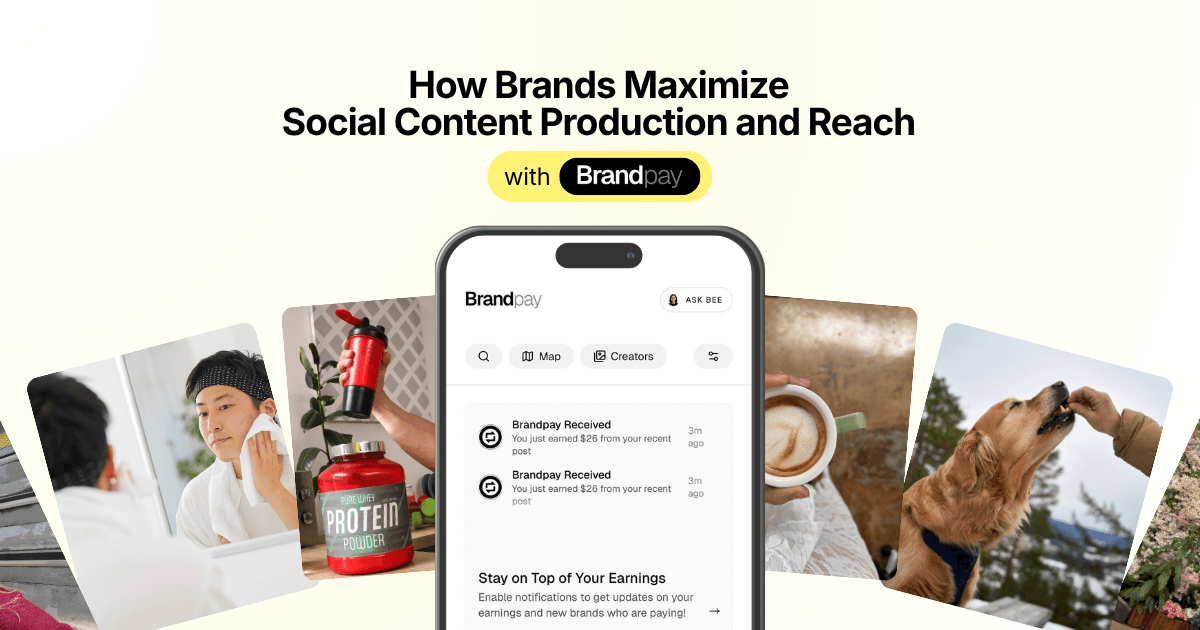
Story rewards with BrandPay introduce something that every marketer should be very excited about. Not more content, more distribution. Now when a brand posts a Reel or a Post, customers can repost it to their Story and add their own creative take on it. They share it with their audience and earn store credit for doing this.
It sounds simple, but the effect is exactly like clipping. Instead of one post sitting on the brand page, you get the original post plus dozens or hundreds of Story reposts, each with a slightly different angle, each reaching a different network, all tagging and linking back to the same source.
This Is Clipping, but Natural
Clipping works because people are incentivised to distribute content. Story rewards do the same thing, but in a way that works with your existing customers, and feels natural to how people already use Instagram. This marketing army is not doing it to bank money, they are doing it because they intend to return and purchase from you, and their earnings allow for incremental spend. That item they could not justify last time they checked out, has now become a little more affordable.
Why Stories Matter More Than People Think
Most brands still think in terms of grid posts, but most behaviour happens in Stories. They are faster, lower effort, more frequent, more conversational. People are more likely to share something to their Story than post it on their grid, and that makes them the easiest entry point for participation, and the fastest way for your brand to scale distribution.
When this works, it doesn’t look like a campaign, it is brand presence. People start seeing your brand across different accounts, different audiences, with slightly different context each time, and they all point back to you. This is the same pattern clipping creates, the difference is it’s powered by customers, not paid clippers.
From Content to Infrastructure
Most brands already have content, the challenge is distribution. Influencers solve this at the top end, paid ads solve it with spend. Story rewards open up a third, and massive layer, customer-driven distribution, at scale. Not by asking customers to become creators, but by rewarding behaviour they already do.
Clipping was the first successful version of that, story rewards now make it easily achievable in a more natural way.
Nothing goes viral by accident. It just looks like it does.